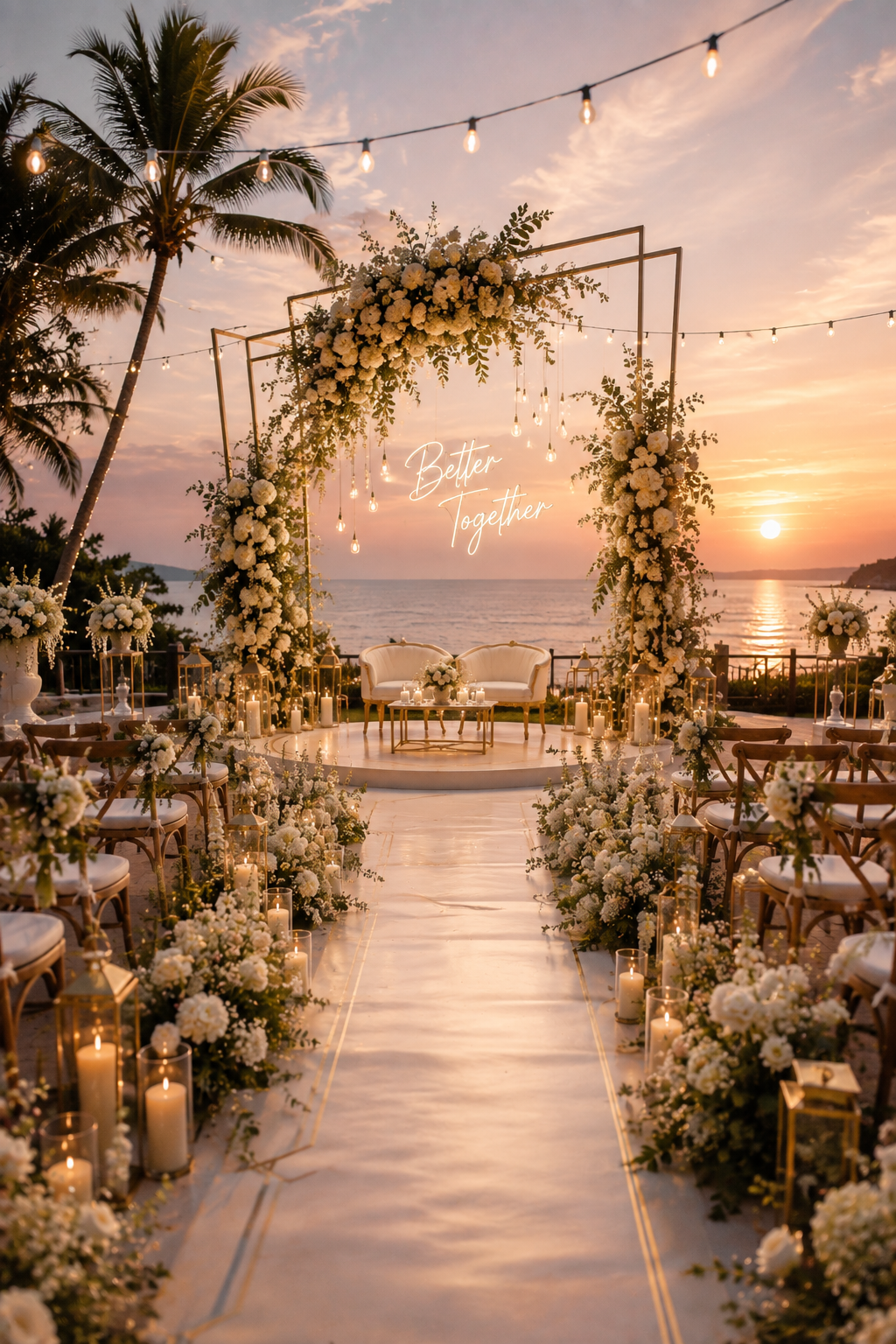
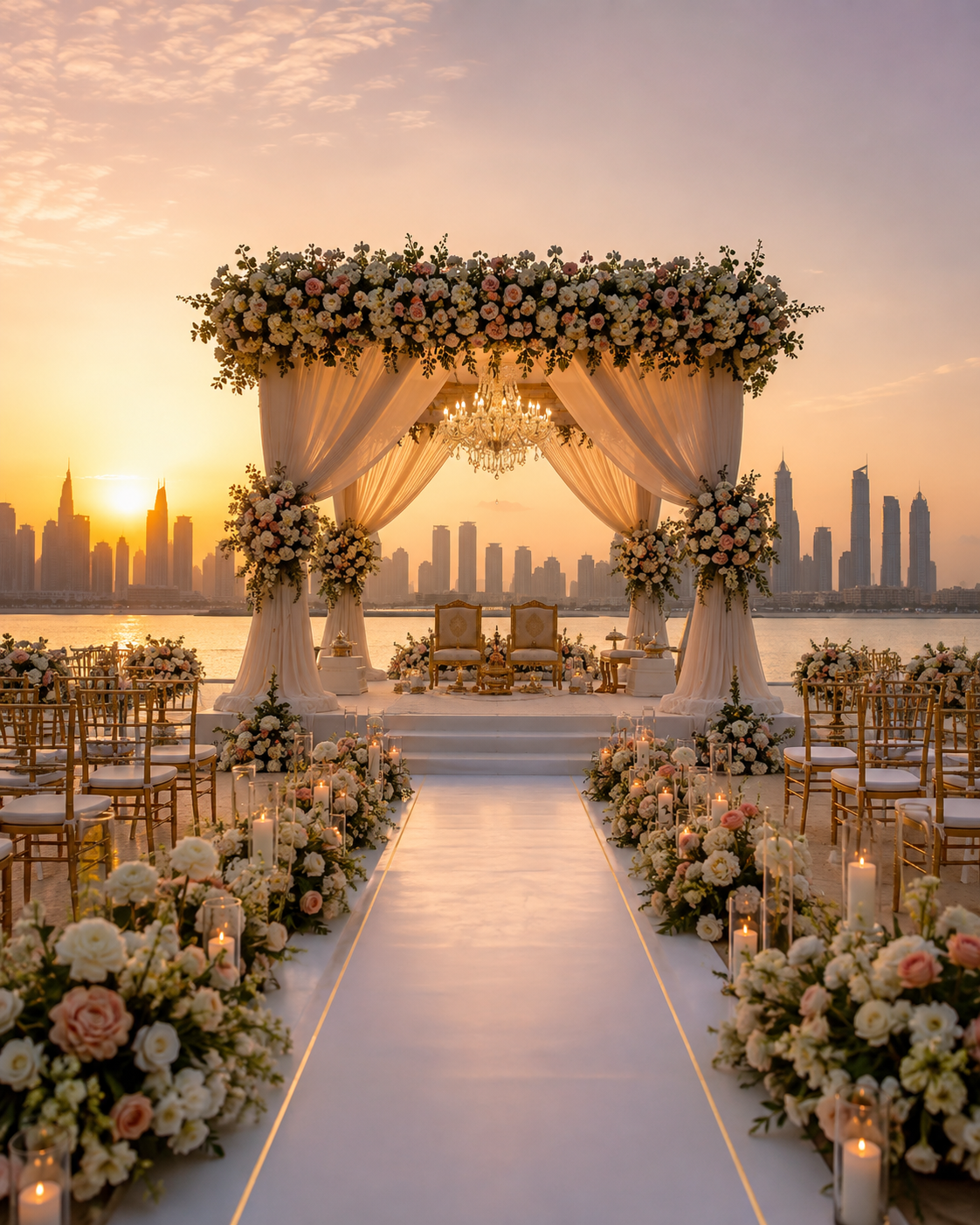
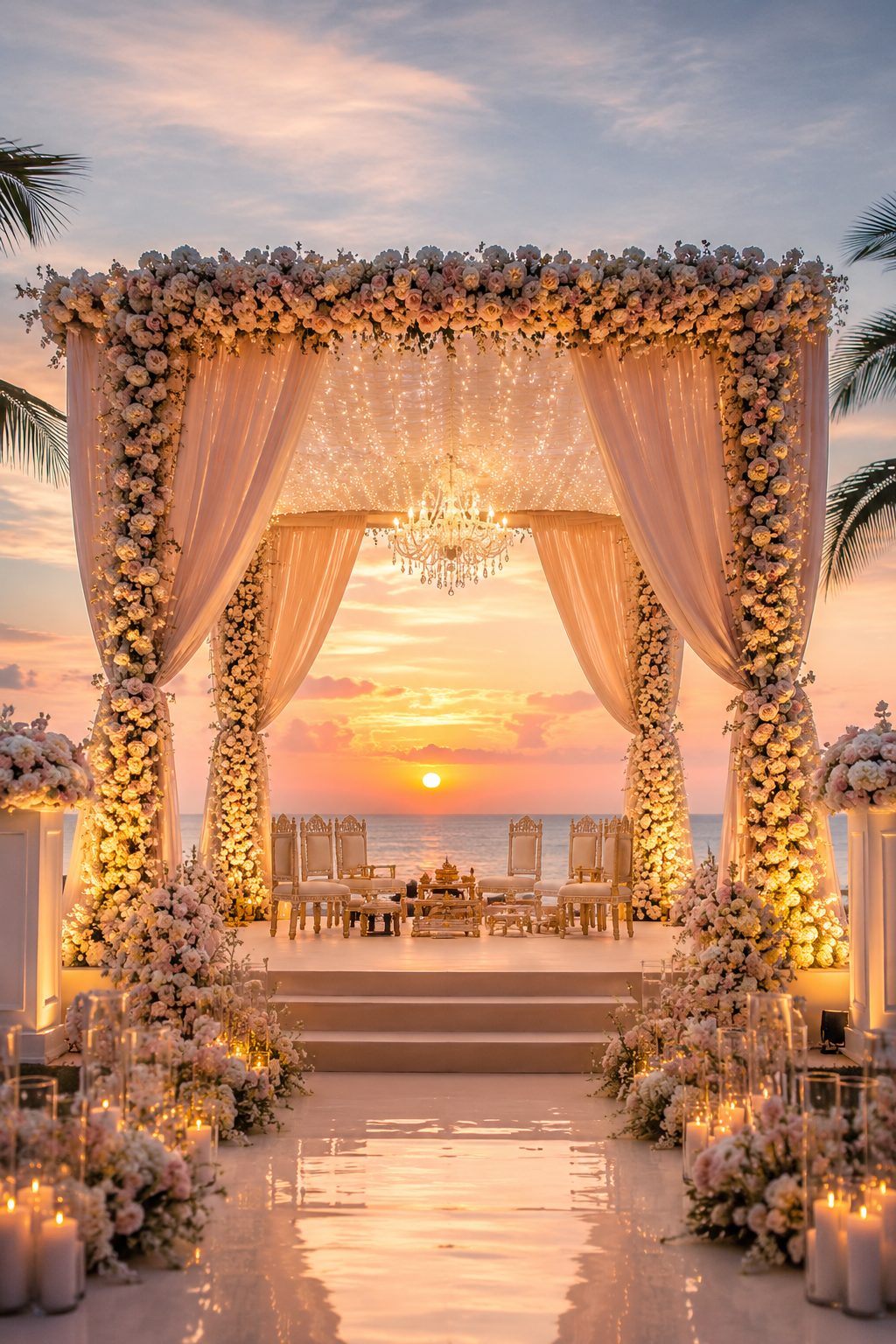
Dubai has more wedding suppliers per square kilometre than almost any city its size, and every one of them describes itself as bespoke, luxury and award-winning. That makes the shortlist stage genuinely hard: the marketing language is identical, the portfolios look similar, and the pricing models are not comparable to each other. This guide sets out how to evaluate wedding planners in Dubai on the things that actually differ – service model, scope, pricing structure and delivery capability – so you can compare three quotes on a like-for-like basis instead of on aesthetics.
What a wedding planner in Dubai actually does
A planner sits between you and every other supplier. In practice the role covers four separate jobs, and different companies do some of them and not others: design (theme, colour, floor plan, mood boards), procurement (sourcing and contracting suppliers), logistics (delivery windows, load-in, setup and takedown, transport, crew) and on-the-day management (run sheet, timings, supplier arrival, problem-solving).
Décor studios usually own design and production. Coordinators usually own logistics and the day itself. A full-service wedding event planner owns all four. When you read a proposal, map each line item to one of those four jobs – the gaps become obvious immediately, and gaps are where unbudgeted costs appear later.
The three service models, and which one you need
Almost every offer in the market is a variant of one of three models.
- Full-service planning. The planner is engaged from concept to takedown and manages design, suppliers, budget and the day itself. Best for destination couples, guest counts above roughly 80, and anyone planning around a demanding work schedule.
- Package-based planning. A fixed-price bundle of décor, production and coordination with defined inclusions and a published price. Best for couples who want budget certainty and a fast decision, and who are happy to work inside a curated design system rather than commission a one-off concept.
- Day-of coordination. You plan and book everything; a coordinator takes over the run sheet in the final weeks. Cheapest, and only sensible if you have the time and local supplier knowledge to run procurement yourself.
If budget predictability is the priority, the package model removes the most variables. There is a fuller argument for that in our post on why wedding packages beat booking vendor by vendor, and you can see how a package-based structure looks in practice across our three wedding packages in Dubai.
Ten questions to ask before you sign anything
Ask all ten of every company you shortlist, and write the answers down. Comparable answers are worth more than a beautiful deck.
- Is the quoted figure fixed, or is it an estimate that moves with final guest numbers?
- What exactly is excluded – and specifically, is venue hire, catering, licensing or transport inside or outside the number?
- Who is on site on the wedding day, in what role, and for how many hours?
- Do you produce your own décor, or subcontract it? Who is liable if a subcontractor fails?
- What is your setup window, and what happens if the venue releases the space late?
- How many weddings will your team run on my date?
- What is the payment schedule, and what is the cancellation and postponement policy in writing?
- Are the florals fresh or artificial, and which elements are which?
- Can I see a full run sheet and floor plan from a comparable wedding?
- What is your contingency plan for weather, supplier no-show and power failure?
How to read a quote and spot the gaps
Three quotes at similar headline prices routinely describe very different scopes. Normalise them before comparing. Rebuild each quote into the same five buckets: décor and florals, structures (stage, backdrop, dance floor, catwalk), technical (sound, lighting, power), people (coordinator, crew, entertainment) and logistics (transport, setup, takedown). Anything that does not fall into a bucket in one quote but does in another is a real cost difference, not a discount.
Watch particularly for: guest-count ceilings, hourly caps on photographers or entertainment, “from” pricing on florals, and takedown billed separately. For a full picture of where the money goes in a Dubai wedding, our 2026 Dubai wedding cost breakdown walks through the six major cost drivers line by line.
Package pricing versus hourly and percentage fees
Three fee structures dominate the market. A percentage fee (typically charged on total wedding spend) rises as your budget rises, which creates an obvious tension when you are trying to cut costs. An hourly or flat management fee is predictable for the planner’s time, but sits on top of every supplier invoice you still have to pay individually. A fixed-price package folds design, production, logistics and setup into one number.
For reference, our own structure is package-based and published: the Essential Edit at AED 35,000 covers the core décor build, structures and on-the-day setup and takedown; the Signature Edit at AED 45,000 adds a larger backdrop and stage, catwalk, dance floor, a mix of fresh and artificial centrepieces, a lighting system and a dedicated wedding coordinator on site on the day; the Lux Edit extends that with a three-panel backdrop, the largest stage footprint, fresh table florals, seating chart and full table décor. All three tiers are quoted for up to 100 guests. You can compare the three tiers side by side or read how the full-service wedding event planner service wraps around them.
Warning signs worth walking away from
- No written scope. If the inclusions live only in a WhatsApp thread, there is nothing to hold anyone to.
- A quote with no exclusions list. Every honest quote has one.
- Portfolio images that never repeat a venue or a crew. Ask which weddings the company delivered end-to-end versus styled for a shoot.
- Pressure to pay a large deposit before a floor plan or design direction exists.
- No named on-site contact for the wedding day.
- Reluctance to confirm fresh versus artificial florals in writing – this is one of the largest single cost variables in Dubai décor.
Matching a planner to your guest count and style
Scale changes which model works. Under about 60 guests, a curated package with a strong single design idea usually outperforms a bespoke build, because the room does most of the work – the logic behind our small wedding packages in Dubai and the reason minimal wedding packages have become so popular here. Between 60 and 100 guests, structures start to matter: stage size, catwalk, dance floor and centrepiece count drive both the look and the price. Above that, you are buying logistics as much as design, and full-service management earns its fee.
Style matters less than most couples expect at the selection stage, because a competent planner can execute any of the mainstream Dubai aesthetics. What matters is whether their system is theme-led or bespoke. If you are still deciding on a direction, our guide to wedding décor themes in Dubai breaks down how each style photographs and what it costs to build.
How the process runs at I Do Weddings
A good planner should be able to describe their process in one sentence per stage. Ours runs in five steps: enquire (share your date and vision), consult (we guide you through themes and styling), choose (select your décor theme and package), design (we finalise details, visuals and logistics) and celebrate (our crew sets everything up and takes it down).
I Do Weddings is curated by The Big Night Events, and works with both UAE-resident and fly-in couples – the destination wedding planner service is built specifically for couples planning from abroad. If you would rather start from the calendar than the design, the complete Dubai wedding planning checklist and timeline maps every stage from engagement to the wedding day, and how to book sets out what happens after you enquire. Venue not confirmed yet? Read how to choose a wedding venue in Dubai first – it changes what your décor budget buys.
Frequently asked questions
How far in advance should I book a wedding planner in Dubai?
Most couples engage a planner 6–12 months out. Peak season dates and popular venues go earliest, so if your date is fixed, treat planner and venue as a single decision made together rather than in sequence.
Do wedding planners in Dubai include the venue in their price?
Usually not. Venue hire, catering and any licensing are typically contracted directly with the venue. Always confirm which of the three sits inside a quoted number before comparing two proposals.
What is the difference between a wedding planner and a wedding coordinator?
A planner works across the whole project, from design through procurement to delivery. A coordinator manages execution – usually the final weeks and the day itself. Some packages include a coordinator on site without including full planning.
Can I book a wedding planner in Dubai from another country?
Yes. Planning remotely is standard here – consultations, design approvals and payments run online, with the planner handling every on-the-ground element. See the destination wedding planner in Dubai page for how the remote process works.
How much does a wedding planner cost in Dubai?
It depends entirely on the fee model. Percentage and hourly models vary with your total spend; package models publish a fixed figure. Our own packages start at AED 35,000 for the Essential Edit. The Dubai wedding cost breakdown covers the wider budget picture.